


Everyone's talking about what got exposed. Nobody's talking about what it proved. Here's the version that matters for your portfolio.
On March 31, 2026, Anthropic accidentally shipped internal Claude Code source in a public npm package. Reports said the exposed source map allowed roughly 500,000 lines of TypeScript across about 1,900 files to be reconstructed. Anthropic said it was a release packaging mistake caused by human error, not a security breach, and that no customer data or credentials were exposed.
That was the security story. The more useful story is what the code confirmed about how serious AI products are actually built.
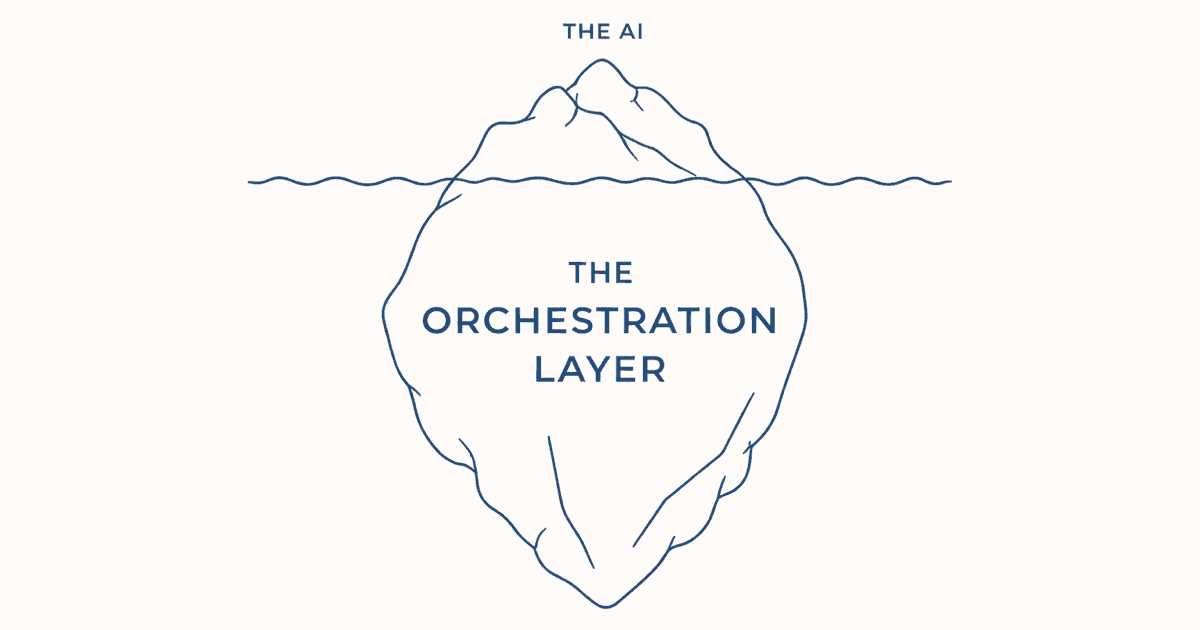
What leaked was not Claude's model weights or some magical hidden brain. It was the software layer around Claude Code: the memory systems, tool access, orchestration rules, and workflow logic that make a strong model usable on messy real-world tasks.
The Model Is Not the Product
The base model is the intelligence. It predicts, reasons, writes, and answers. But the base model alone is rarely what makes an AI product reliable.
The useful part is the layer wrapped around it: what context gets passed in, what tools are available, what gets remembered between steps, what gets checked before an action runs, what happens when a step fails, and how the system stays on track over a long task.
The reporting around the Claude Code leak kept surfacing exactly those kinds of systems: memory architecture, tool routing, task handling, permissions, and orchestration logic. In other words, the boring-looking software layer that turns a model into a product.
Why This Matters More in Property Management
For property managers, that distinction matters because the work is full of edge cases, regulated money flows, and domain language. A generic model can look impressive in a demo. It still needs to be taught your world every time it touches a real workflow.
Does it know the difference between a leaseholder and a tenant? Does it understand why service charge money needs to sit separately? Can it tell an owner statement from a rent ledger? Does it know that a maintenance issue, an arrears chase, and a lease renewal are three completely different operational paths?
If it does not, your team becomes the orchestration layer. Staff end up translating context into prompts, checking outputs manually, and correcting the system every time the task gets specific.
The Translation Tax Gets More Expensive With AI
That translation tax already exists in software. Generic tools always cost more in process work because your team has to explain the business to the tool instead of the tool understanding the business.
With AI, that tax compounds. The more capable the model becomes, the more value depends on the structure around it. Without domain-specific prompts, tool permissions, memory rules, and workflow logic, you are still paying humans to do the translation.
An AI product built for property management should already know the objects, rules, and exceptions that define the job. It should not need a mini-briefing every time someone asks about arrears, service charges, landlord payouts, renewals, or compliance workflows.
What the Leak Really Proved
The Anthropic leak did not prove AI is less powerful than people thought. It proved the opposite: the teams building the best AI products are investing heavily in orchestration.
They are not treating the model as the whole product. They are building substantial software around it because that is where reliability, repeatability, and workflow fit come from.
That should sound familiar. Vertical SaaS has worked this way for years. The companies that understand the domain deeply outperform the ones that start with a generic system and bolt on a few features later.
Built for You Versus Bent Toward You
AI does not change that logic. It sharpens it.
Once software includes a model that can reason and act, the quality of the surrounding domain layer matters even more. The more the system understands your workflows, terminology, constraints, and outputs, the more useful the AI becomes.
That is the gap property managers should pay attention to when evaluating vendors: not who says they "have AI," but who has encoded property management into the layer that tells the AI what to do.
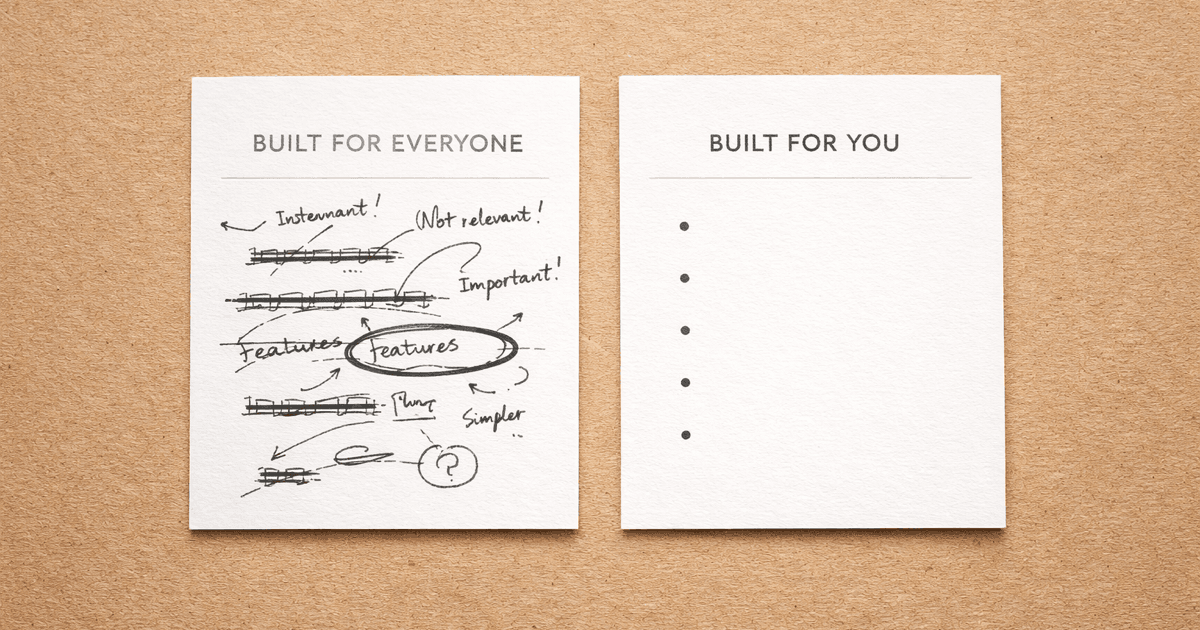
Built for you and bent toward you are not the same thing. In traditional software the difference is noticeable. In AI, it is going to be a canyon.
The Durable Lesson
The leak will disappear from the news cycle quickly. The lesson will not.
The winning AI tools in property management will be built by teams that understand property management well enough to shape the orchestration layer around the model.
The model is the starting point. The domain-specific software around it is the moat.
Estate Manager
Put the work behind your portfolio in one clear view.
Keep every part of your portfolio connected, visible and easier to run.