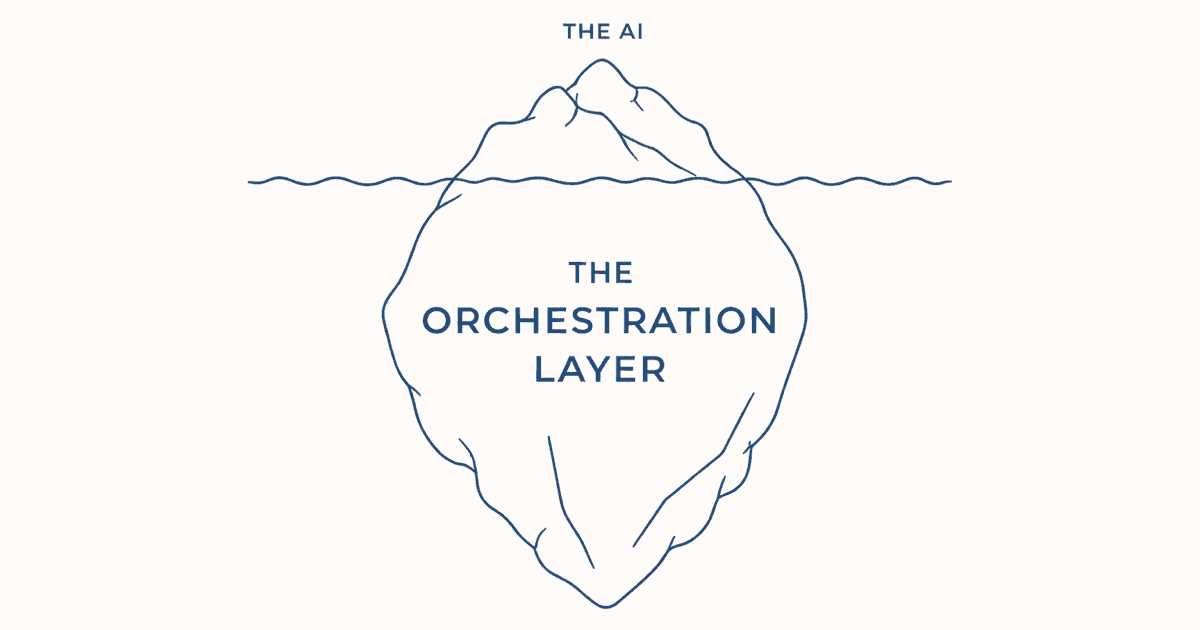



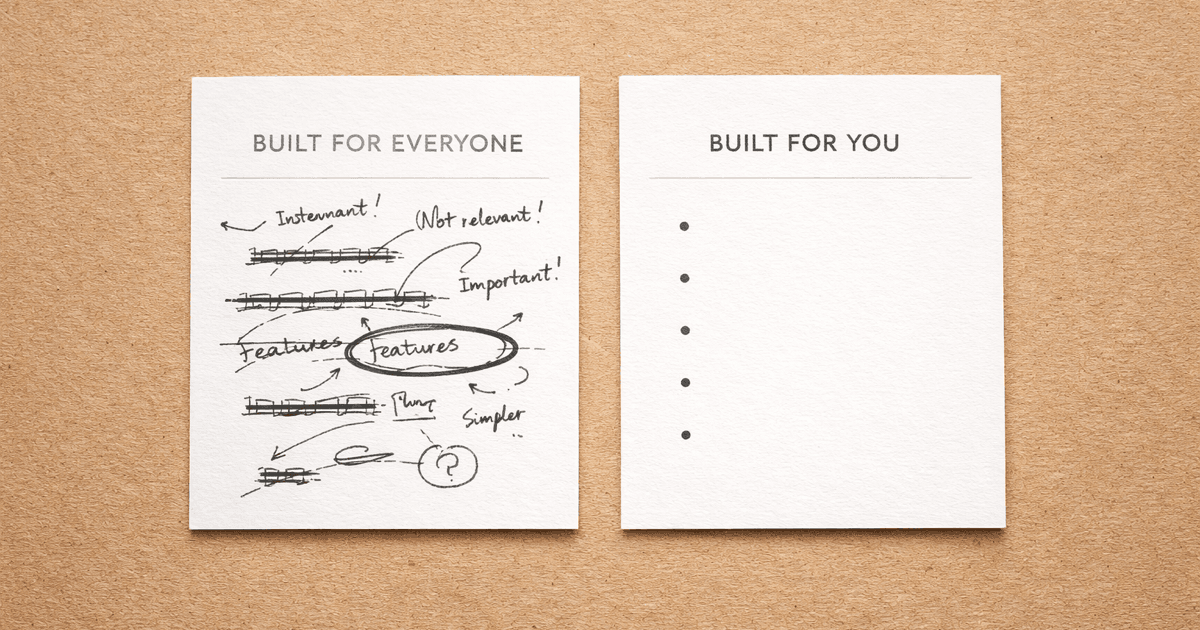
The difference is not a nicer interface. It's software that already understands the money flows, roles, and exceptions property managers deal with every day.
The Translation Tax
For years, property managers made do with software built for someone else. That compromise shaped the job more than most people realised.
Here's a conversation that happens constantly in property management, in various forms:
"The accounting software doesn't understand service charges. The payment processor doesn't know what a leaseholder is. The CRM wasn't built for tenancies. We've stitched it all together with spreadsheets and it mostly works."
Take a normal workflow. Rent comes in. A management fee has to be carved out. Service charge money needs to sit separately. The owner needs a statement that actually makes sense when it lands in their inbox. In too many offices, that single flow still touches multiple systems and a spreadsheet before anyone is confident the numbers are right.
Notice the last three words in that quote. Mostly works. That's not a description of a functioning system. It's a description of a system nobody has had the time or energy to properly replace.
And the cost of "mostly works" isn't just the occasional error. It's every hour spent translating between tools that don't share the same assumptions. It's the end-of-month reconciliation that takes a day when it should take minutes. It's the owner statement that requires four steps across three systems before it can be sent.
That cost has a name. It's the translation tax. Property managers have been paying it for years because there was no credible alternative.
There is now.
What Happened to the Trades
Think about what happened to trades businesses - plumbers, electricians, HVAC technicians - when software built specifically for them arrived.
Before, a plumbing business owner ran jobs from a whiteboard, invoiced from a generic template, chased payments by phone, and reconciled everything on a Sunday evening. The tools worked. Mostly. But every job involved translation: turning a booking into a calendar entry, a job into an invoice, an invoice into a bank transfer, a bank transfer into an accounting entry. Four steps, four different tools, four chances for something to fall through.
ServiceTitan was built to understand a trades business natively - job dispatching, parts pricing, technician schedules, payment on completion, customer history in one place. Businesses that switched didn't just save time. They stopped losing work they didn't know they were losing. They stopped chasing payments that should have been collected on-site. They stopped doing Sunday reconciliations.
The software didn't improve the business incrementally. It removed entire categories of friction that owners had started to mistake for the normal cost of operating.
Property management has the same shape. The friction is so familiar it's invisible - until software that understands your domain specifically makes it disappear.
What Built for You Actually Means Now
"Built for property managers" used to mean: we added a field for property addresses. That was the bar. Generic accounting with a tweak. A payments processor that could handle recurring billing if you configured it correctly. A CRM that could track tenancies if you squinted at it right.
What it means now is genuinely different. It means software that knows the difference between a leaseholder and a tenant - and treats them differently because they are different. It understands why service charge float sits in a separate account and handles it accordingly. It can split a payment across multiple owners on different percentage splits without you building a formula each time. It produces a statement a landlord can read without a cover email explaining what the numbers mean.
These are not cosmetic features. They are the difference between software that carries operational load and software that creates more of it.
The Spreadsheet Test
The property manager reading this probably has a spreadsheet open right now that exists because their main system can't quite do something. That spreadsheet is a symptom of software that was built for someone else and bent, slowly and imperfectly, into something that approximates what the business needs.
That is the simplest test. If your operation depends on side spreadsheets, manual workarounds, or team knowledge that lives in someone's head, your software does not understand your business deeply enough yet.
The translation tax is real, it is daily, and it is optional. Not because every product claiming to be vertical is good, but because the right product is built around the actual flows of a property management business: rent in, charges allocated, owners paid, statements generated. One system that speaks your language, not three systems you've taught to communicate.
The Apology That Should Stop
Property managers spent years apologising for their tools. "Sorry, the system doesn't quite do that."
Software built specifically for them should not require that apology. And increasingly, the managers choosing it are not doing so because it feels modern. They are doing it because the translation tax finally got too expensive to keep paying.
That is what "built for property managers" is worth now. Not branding. Not niche positioning. Operational relief.
Estate Manager
Put the work behind your portfolio in one clear view.
Keep every part of your portfolio connected, visible and easier to run.