


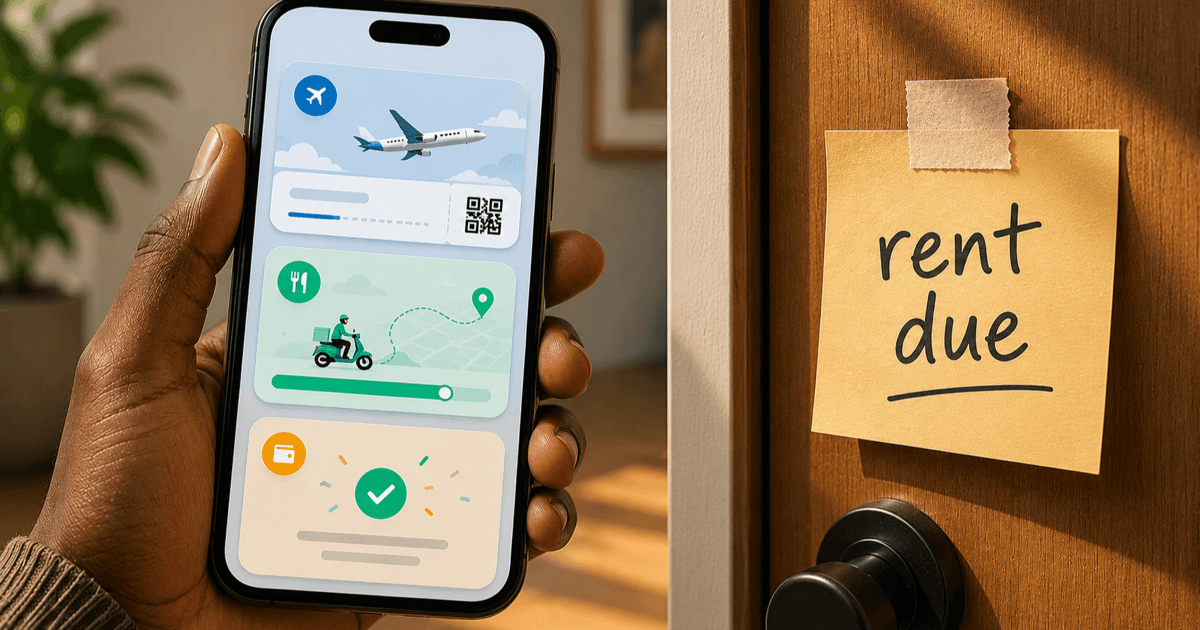
Renters already manage money, travel, food, and bookings through their phones. When rent, maintenance, and charges fall back into WhatsApp threads and bank transfers, the trust cost is higher than most landlords think.
The expectation gap between how renters live digitally and how most landlords still operate is widening, and tenants are quietly leaving because of it.
They booked their flat on Airbnb. Their Friday night dinner on Chowdeck. Their flight to London on the Emirates app. Their Uber to the airport in under four minutes. They split the bill at dinner through a tap. Ordered a new duvet online before they got home.
Then rent was due. And somehow they were back to 2009, pinging a bank reference number, waiting for a WhatsApp reply, wondering if the payment went through, and texting about a leaky tap that nobody has acknowledged in four days.
This is the gap. Not a technology gap. An expectation gap. And it is costing property managers tenants they never realised they were losing.
The World Tenants Live In
Across accommodation, food delivery, transport, payments, and travel, the pattern is clear: tenants already live inside mobile-first systems. They book, pay, track, confirm, raise issues, and make decisions through their phones. Gen Z and Millennials, who make up a growing share of renters, do not treat this as a convenience layer. They treat it as the default way services should work.
This is not a preference. It is an operating assumption. The phone is the interface for everything: money, bookings, appointments, deliveries, conversations. The expectation is no longer that you should try to offer something digital. It is that anything important should work digitally by default.
The World Tenants Rent In
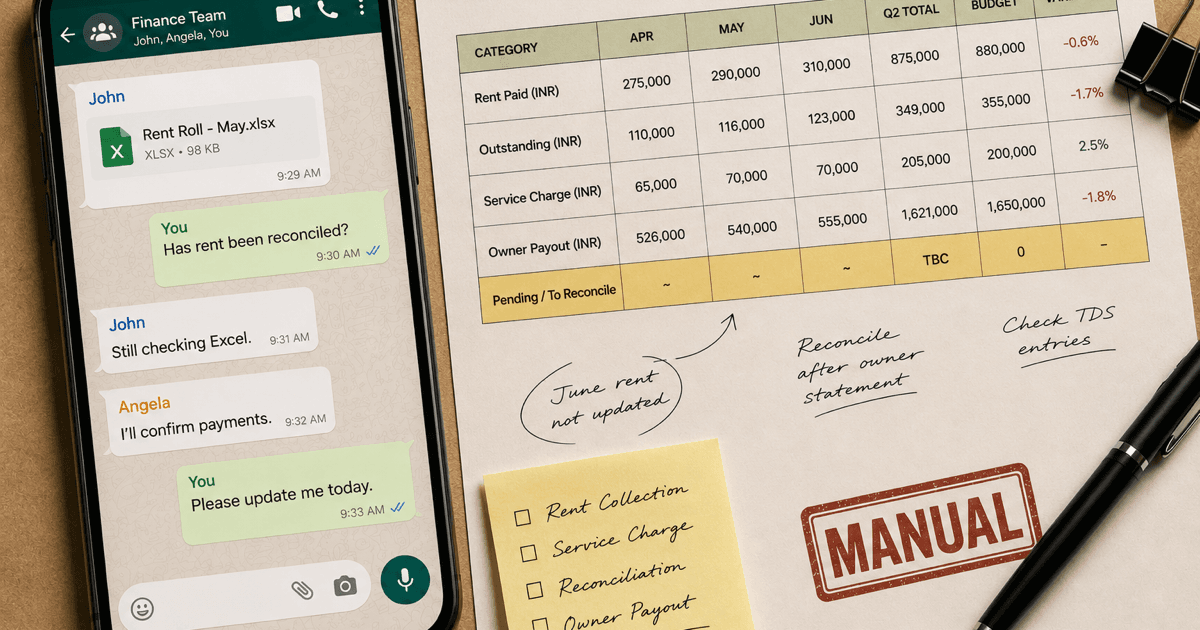
Despite that, most property management communication still runs on a combination of WhatsApp threads, emailed spreadsheets, manual bank transfers, and the phone call that on busy days goes unanswered. More than half of property teams spend five or more hours every week just managing tenant communications. Much of it sits across personal inboxes, WhatsApp threads, and phone logs with no central record.
Tenants submit maintenance requests by text. Chase them by text. Wonder if it was received. Chase again. Landlords do the same on the other side: manually confirming payments, tracking what's outstanding in a spreadsheet, forwarding updates about service charges that get buried in a chat before anyone has a chance to act on them.
The friction isn't dramatic. It doesn't usually lead to confrontation. It just quietly erodes trust, one unanswered message at a time.
What This Looks Like From the Tenant Side
There is a particular frustration that comes when two things that should match do not. A tenant who manages their entire financial life through an app doesn't expect perfection from their landlord. But they do notice when the contrast is too large.
They can track a DHL parcel at every stage of delivery. They can pay their DSTV subscription in a few taps. But they can't see a clean breakdown of what they owe in service charges, or get an instant digital receipt for their rent payment, or know when the lift repair was actually logged.
It doesn't seem significant at first. It just feels slower, less clear, and more effortful than everything else they do on their phone. And when renewal comes around, that feeling lingers.
The Retention Math
Tenant turnover is expensive. Between vacancy loss, re-letting costs, light refurb, and admin, a single turnover can wipe out months of rental income on a unit. Even a small reduction in turnover can make a meaningful difference to a property manager's annual income.
The difference between a high-turnover block and a lower-turnover block is not abstract. It can mean fewer vacancies, fewer re-letting costs, less admin, and less light refurb work each year. Not because rents were discounted, or because the properties were upgraded. Because the experience of being a tenant there was frictionless enough that leaving felt like more effort than staying.
Tenants rarely say, "the app was bad." They just decide, over time, that living somewhere else might be easier. By the time renewal comes around, that judgment has already been made.
The Gap Is Structural, Not Stylistic
Adding a WhatsApp Business account does not close this gap. Neither does a better email signature. The gap isn't about tone. It's about infrastructure.
Tenants want to pay rent and see it confirmed. They want to raise a maintenance issue and track what happens to it. They want to see what service charges are, what they cover, and when they're due, the same way they see everything else in their financial life. Clarity isn't a bonus feature. It is the baseline.
They are not asking for luxury. They are asking for parity with everything else on their phone.
The Standard Has Already Moved
The bar for tenant experience isn't set by competitors in property management. It's set by Uber, Glovo, and every other product that made frictionless the default. Tenants aren't comparing you to the next property manager down the road. They're comparing you to every other service on their phone.
That's a higher bar than it used to be. It's also a clearer one. You do not need to guess what tenants want from a digital-first rental experience. They show you every day in how they already book, pay, track, and communicate.
Estate Manager
Put the work behind your portfolio in one clear view.
Keep every part of your portfolio connected, visible and easier to run.